
Cleanroom Airflow Visualization
& Smoke Study Services
Visualize Airflow. Strengthen Contamination Control. In pharmaceutical and other regulated manufacturing environments, an Airflow Pattern Test (AFPT) plays a critical role in protecting critical processing areas from potential contamination risks.
Experience You Can Trust
Smoke Study Challenges vs Solutions
Poorly documented airflow with low-resolution video.
OUR SOLUTIONUltra HD 4K documentation for undeniable visualization.
Delayed reporting causing compliance bottlenecks.
OUR SOLUTIONAudit-ready reports delivered within 24 hours of execution.
Incorrect smoke generation risking contamination.
OUR SOLUTIONGMP-aligned pharma-grade smoke generation (DI water/WFI).
Incomplete documentation of worst-case interventions.
OUR SOLUTIONComprehensive mapping of all dynamic operational states.
Why Our Smoke Studies Stand Out
Ultra HD 4K
Every airflow movement captured with audit-ready clarity.
Multi-Angle Coverage
Simultaneous recording from multiple viewpoints.
24-Hour Delivery
Fast, edited turnaround for validation timelines.
Static & Dynamic
Comprehensive assessment under all conditions.
Isolator Expertise
Specialized studies for Grade A aseptic environments.
Compliance-Ready
Reports aligned to USFDA and EU GMP expectations.
Six Studies. One Complete Airflow Picture.
Static Smoke Study
At-rest baseline behavior
- HEPA airflow visualization
- Return airflow assessment
- Dead zone identification
Dynamic Smoke Study
Operational conditions
- Personnel movement impact
- Equipment interaction
- Airflow recovery evaluation
UDAF, RABS & Isolator
Grade A critical zones
- First air verification
- Airflow sweeping assessment
- Critical zone protection
HVAC Assessment
System-level airflow
- Supply airflow assessment
- Distribution mapping
- Short-circuit identification
Material & Personnel
Transfer & movement
- Airlock studies
- Pass box assessments
- Door opening impact
Investigation & CAPA
Root-cause diagnostics
- Dead zone investigation
- Airflow reversal analysis
- Corrective action verification
Industry-Leading Video Capture
We use advanced 4K Ultra HD and 1080p close-up GoPro systems to capture high frame rate videos. Aligned with ISO 14644-3, EU GMP Annex 1, and USFDA.
- Multi-Angle Camera Setup
- Unedited & Edited Cuts Provided
- Frame-by-Frame Critical Analysis
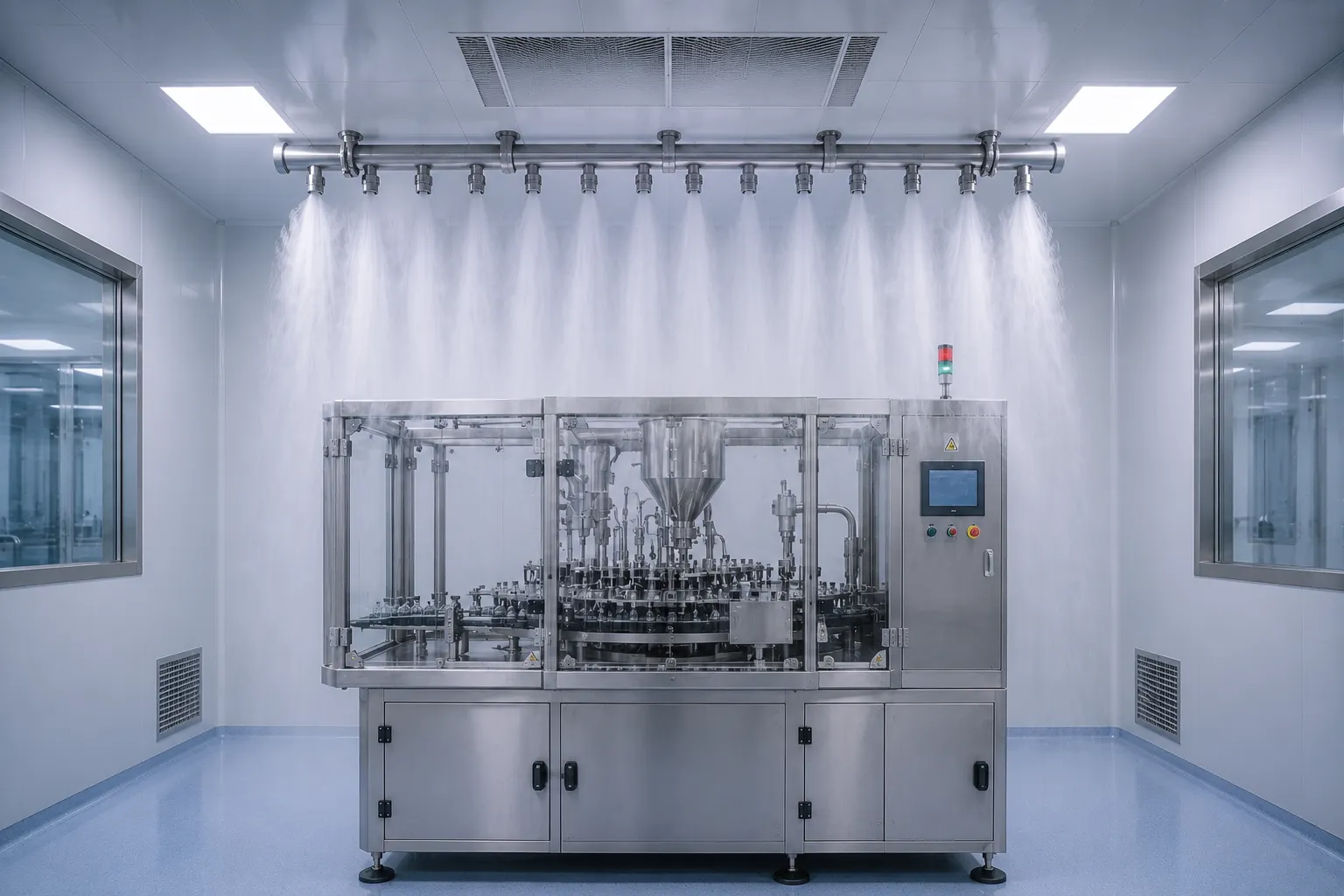
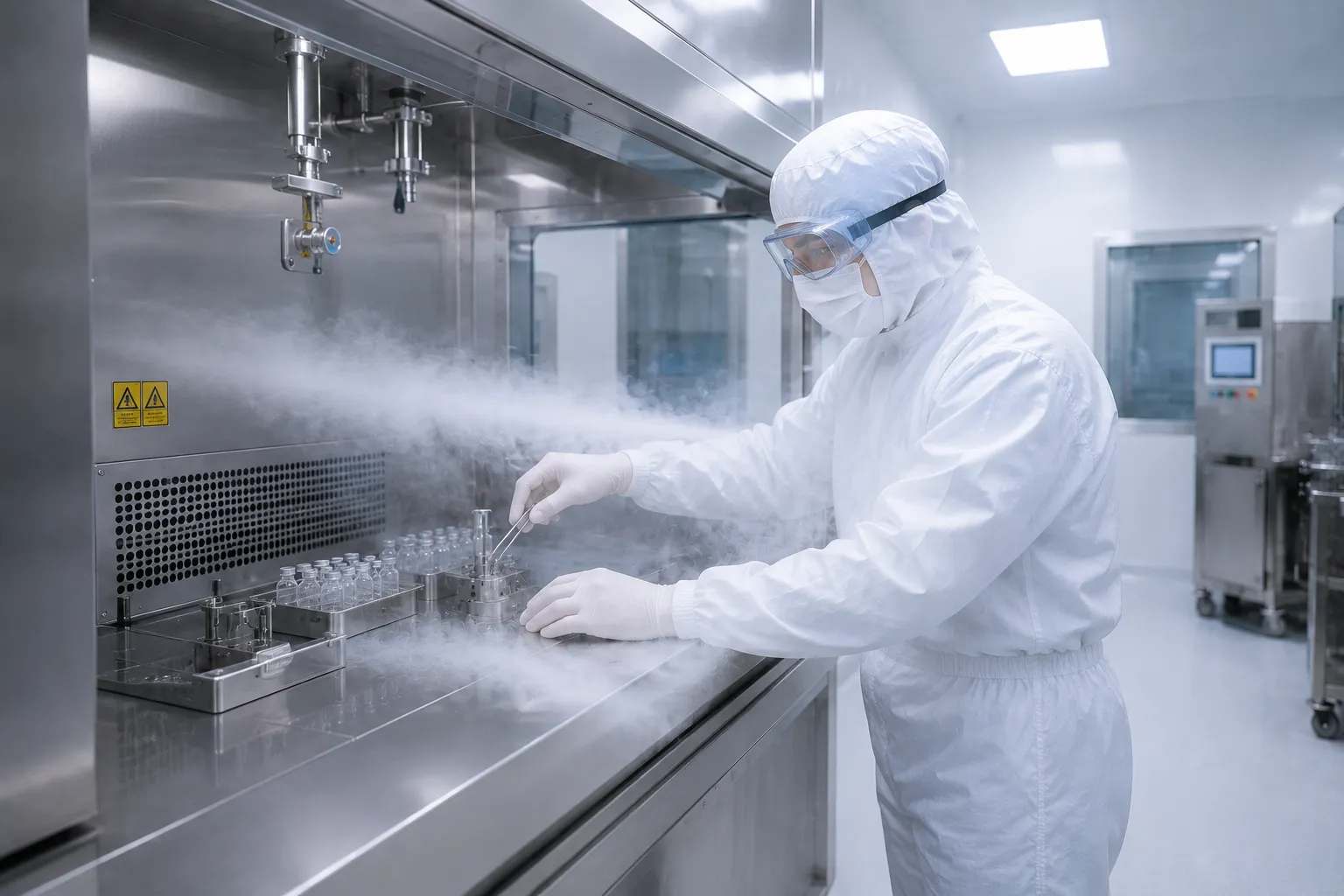
What Is a Smoke Study, Exactly?
A smoke study introduces a visible tracer into the airflow of a cleanroom, isolator or barrier system, and records how that tracer moves. The resulting footage reveals airflow direction, turbulence, eddy currents, stagnant zones and potential contamination pathways - details that are invisible to the eye under normal conditions.
In Grade A aseptic areas, this is used specifically to verify unidirectional airflow (UDAF) and first-air protection - confirming that critical zones receive clean, undisturbed air before any other surface, and that no air reversal or turbulence compromises product exposure points during interventions.
IncepBio generates its visible tracer using pharma-grade, GMP-aligned methods (DI water / WFI-based), so the study itself introduces no contamination risk into the environment being tested.
Driving Your Contamination Control Strategy (CCS)
Under the revised EU GMP Annex 1, airflow visualization is no longer a standalone test. Regulators expect your smoke study results to actively inform and justify your holistic Contamination Control Strategy (CCS).
- Justify EM Locations: Use empirical airflow data to prove Environmental Monitoring (EM) probes are placed in true worst-case locations.
- Validate Interventions: Document that standard operating procedures (SOPs) and dynamic operator interventions do not compromise the critical zone.
- Periodic Review Ready: Our 4K video deliverables integrate perfectly into your annual CCS review and continuous improvement lifecycle.
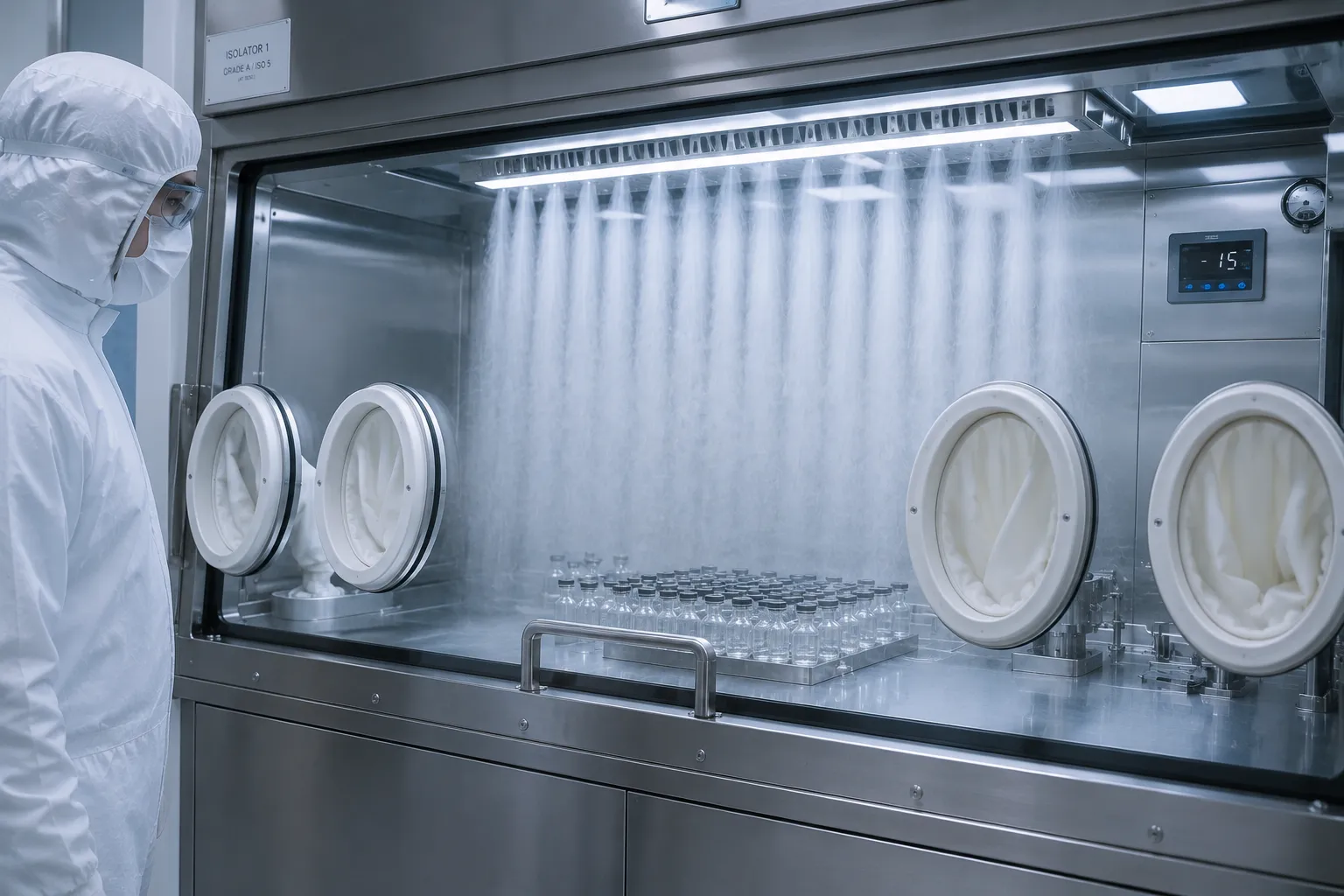
Uncompromising First-Air Protection
During an Aseptic Area Smoke Study, the ultimate goal of any Grade A environment (Isolator, RABS, or UDAF) is to ensure that exposed products and sterilized components only ever come into contact with first air - undisturbed, filtered air that has not washed over an operator or equipment surface.
Undisturbed Flow
Confirming that air sweeps cleanly downwards (or horizontally) without turbulent eddies trapping particles.
Operator Shielding
Proving that dynamic interventions do not cause air reversal from lower-grade backgrounds into the critical zone.
Machine Ergonomics
Visualizing how machine guards and robotics impact the unidirectional airflow over the fill line.
Why Is Smoke Study Important?
In a cleanroom or aseptic environment, airflow behaviour can be influenced by equipment configuration, personnel movement, interventions and process activities. A properly planned study helps identify:
Airflow Direction
Understand how air moves through critical areas.
Unidirectional Flow
Visualize airflow behaviour in critical zones designed for UDAF.
Turbulence & Eddies
Identify undesirable airflow patterns that may affect critical-zone protection.
Stagnant Areas
Help identify areas where airflow behaviour may require further assessment.
Operator Interventions
Evaluate the impact of personnel activities and representative interventions.
Equipment Interaction
Understand how equipment and process configurations influence airflow.
Critical-Zone Protection
Assess airflow behaviour around critical operations and exposed product zones.
Meeting Global Industry Standards
Our Airflow Pattern Testing (AFPT), Pharmaceutical Smoke Studies, and Airflow Visualization Studies (AVS) are strictly executed in compliance with major global regulatory guidelines to ensure your facility passes any audit.
FDA cGMP
21 CFR Part 211 guidelines for Smoke Study for Aseptic Processing and environmental control.
EU GMP Annex 1
Latest revisions covering manufacture of sterile medicinal products.
ISO 14644-3
Standard test methods for cleanrooms and associated controlled environments.
WHO Guidelines
Environmental monitoring and contamination control protocols.
Critical Airflow Issues We Detect
A proper airflow visualization study (AVS) isn't just about blowing smoke. It's about scientifically identifying hidden risks that could compromise your cleanroom's integrity.
Turbulence & Eddies
Identifying areas where non-unidirectional flow creates pockets that trap airborne particles.
Dead Zones (Stagnant Air)
Locating areas with insufficient air movement where contamination can settle on critical surfaces.
Reverse Flow & Entrainment
Detecting instances where contaminated air from lower grade areas is pulled into Grade A/B zones.
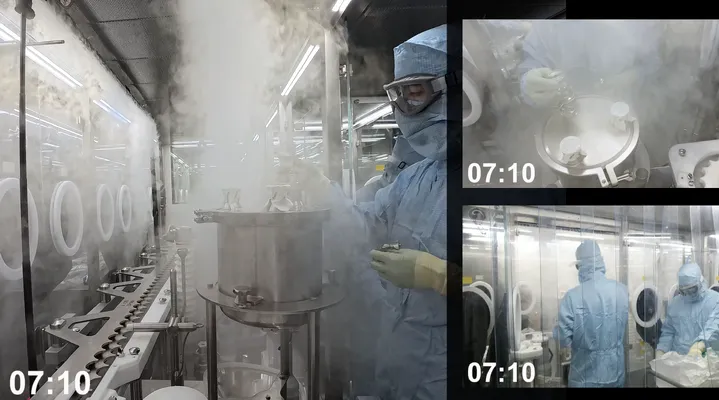
Static vs. Dynamic Smoke Studies
To ensure complete regulatory compliance, airflow visualization must be documented in both operational states. Here is how they differ and why both are critical.
Static State (At-Rest)
Performed when the cleanroom facility is complete and operational, but without operating personnel or ongoing production activities.
- Establishes the baseline airflow behavior and design integrity.
- Validates HVAC performance and HEPA filter coverage.
- Confirms room pressurization cascades without interference.
Dynamic State (In-Operation)
Performed during actual production with a specified number of personnel, operating machinery, and simulated interventions.
- Evaluates the impact of operator movement on first air.
- Identifies turbulence caused by machine operation and heat loads.
- Crucial for Annex 1 compliance and aseptic intervention mapping.
How Is a Smoke Study in Cleanroom Performed?
Review layout & operations.
Identify locations & conditions.
Define methodology & locations.
Introduce visible tracer.
Observe airflow movement.
Perform under operations.
Capture representative flow.
Document results & conclusions.
Key Terms Explained
UDAF
Unidirectional Airflow - air moving in a single, consistent direction to sweep particles away from critical zones.
First Air
The first air to contact a critical exposure point, which must be unfiltered-particle-free and undisturbed.
RABS
Restricted Access Barrier System - a physical barrier separating operators from Grade A processing zones.
Isolator
A fully enclosed system providing complete separation between the operator and the aseptic process.
Eddy Currents
Localized circular air movements that can pull contamination back into a critical zone.
Dead Zone
An area with little to no airflow, allowing particles to settle instead of being swept away.
When to Schedule a Smoke Study
New Facility Qualification
Before a new cleanroom, isolator or RABS system goes into production use.
Periodic Requalification
Typically annually, or per your internal risk assessment and quality program.
Post-Remediation Verification
After HVAC changes, equipment moves, or corrective actions to an existing area.
Investigation Support
When a deviation or contamination event points to a possible airflow root cause.
Sample Deliverables
Study Protocol
Pre-approved scope, locations, conditions and criteria.
Ultra HD 4K Video
Full recordings, unedited and edited cuts.
Annotated Screenshots
Key frames marked up to highlight findings.
Compliance Report
Findings mapped to ISO 14644-3, Annex 1 & USFDA.
Frequently Asked Questions
Ready to Make Your Cleanroom Airflow Visible?
Submit your enquiry → Our team contacts you within 24 hours → Custom scope & proposal prepared.